

Heartworm Disease in Cats: What Every Cat Owner Should Know
Here’s what you need to know to keep your cat safe.
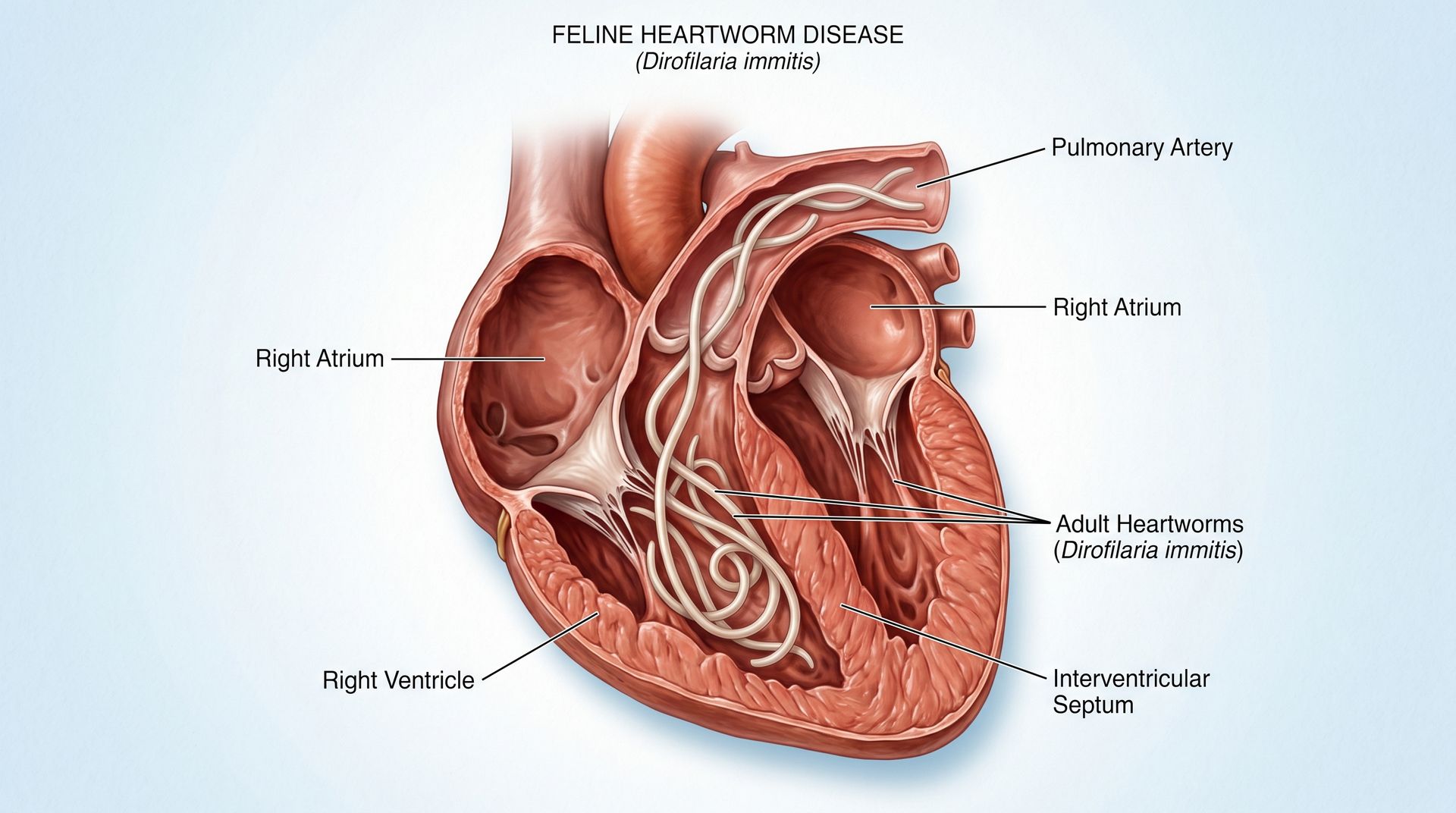
Heartworm disease isn’t just a problem for dogs—cats can be affected too. While it’s less common in cats, it can be harder to detect and potentially very serious.
Where Is Heartworm Found?
Heartworm disease has been diagnosed in all 50 U.S. states and is considered common in most regions. Even indoor cats are at risk because mosquitoes—the carriers of heartworms—can easily get inside homes.
How Do Cats Get Heartworms?
Cats become infected through mosquito bites. When an infected mosquito bites your cat, it can transmit immature heartworms into the bloodstream.
Unlike dogs:
- Cats usually have fewer worms (often just 1–2)
- Infections may involve only male or only female worms
- The parasite typically lives 2–3 years in cats
Even a small number of worms can cause significant health problems.
Why Heartworm Disease Is Serious in Cats
Cats react differently to heartworms than dogs. Even a low number of worms can trigger severe inflammation in the lungs and blood vessels.
This condition is sometimes called Heartworm-Associated Respiratory Disease (HARD).
Signs to Watch For
Some cats show no signs at all, while others may develop:
- Coughing or asthma-like symptoms
- Difficulty breathing or rapid breathing
- Vomiting (a common but often overlooked sign)
- Decreased appetite and weight loss
- Lethargy or general malaise
- Neurologic signs (such as seizures)
- Sudden collapse or even sudden death in severe cases
Because symptoms can be subtle or mistaken for other conditions, heartworm disease is often overlooked.
How Is Heartworm Diagnosed in Cats?
Diagnosing heartworm in cats can be tricky. Veterinarians may use a combination of:
- Blood testsAntigen tests: Detect adult female worms but may miss infections
- Antibody tests: Show exposure, not necessarily active infection
- X-rays (radiographs) to evaluate the lungs
- Echocardiography (ultrasound) to look for worms in the heart and major vessels
No single test is perfect, so your vet may recommend multiple tests.
Treatment Options
Treatment for heartworm in cats is very different from dogs.
- There is no safe medication to kill adult heartworms in cats
- In many cases, cats are monitored over time to allow the worms to die naturally
- Anti-inflammatory medications (like steroids) may be used if lung disease is present
- Cats with severe symptoms may need emergency or supportive care
- In rare cases, surgical removal at a specialty hospital may be considered
Ongoing Monitoring
Cats diagnosed with heartworm are typically rechecked every 6–12 months. Monitoring continues until:
- Tests are negative
- The cat is symptom-free
An Important Hidden Factor: Wolbachia
Heartworms carry a type of bacteria called Wolbachia, which can worsen inflammation. In some cases, veterinarians may recommend antibiotics to help manage this.
Prevention Is the Best Protection
The safest and most effective way to protect your cat is prevention.
- Monthly heartworm preventatives are safe and highly effective
- Year-round prevention is recommended—even for indoor cats
- Prevention also protects against other parasites
Final Thoughts
Heartworm disease in cats is unpredictable and can be serious—even with just a few worms. Because treatment options are limited, prevention is essential.
If you’re unsure whether your cat is protected, talk to your veterinarian about starting a prevention plan today.
Dawn Truesdale
Veterinarian at Linworth Animal Hospital
APN Board Member